
The ROMANIA project focuses on innovative advancements in RF (radio frequency) technology to enable more efficient and compact systems for modern communication and electronics. The research aims to develop new concepts and technologies for RF components that offer superior performance and flexibility.

The ROMANIA project strives to redefine the future of RF technology by introducing innovative ideas and practical solutions that can transform how communication systems are designed and built. This work promises to impact industries ranging from telecommunications to next-generation wireless technologies.
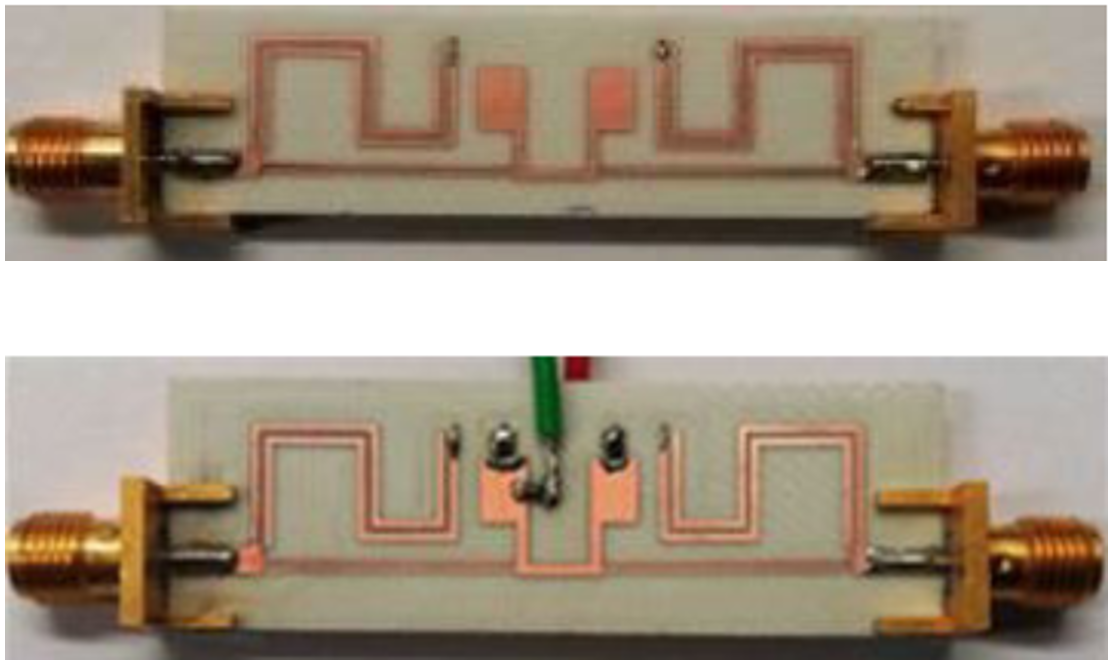
High-selective bandpass filters (BPF) with constant bandwidth and 5:1 bandwidth tuning ratio
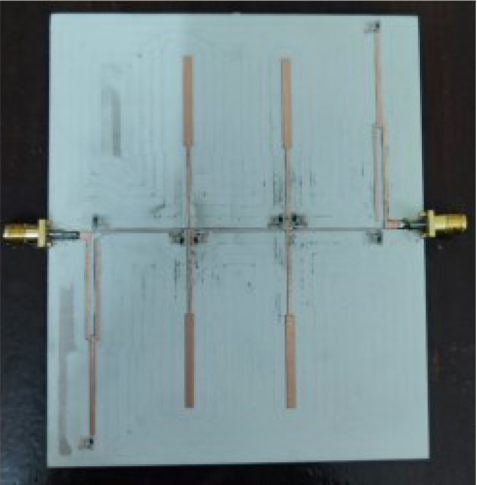
Multifunctional and reconfigurable bandpass filter (BPF) with continuously tunable attenuation
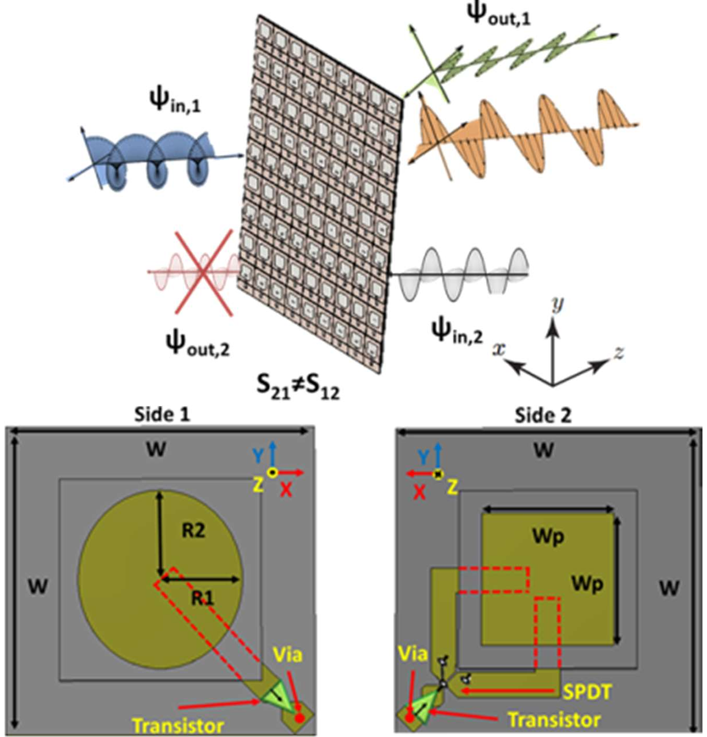
Directional metasurface with selective polarization using antenna elements
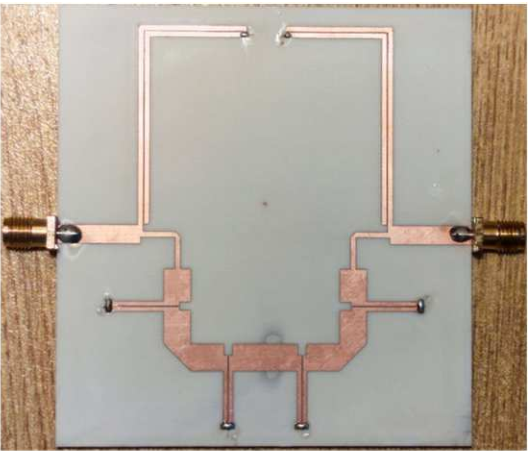
Highly-selective wideband bandpass filter (BPF)



RFID enabled inventory tracking and localization


The AWARENESS idea proposes the investigation of composite materials built from resin or multi-filament 3D printers as candidates for lightweight, flexible and custom – electric permittivity materials for antennas and wireless sensors. Considering the high number of applications related to the integration of Internet of Things (IoT) sensors with the contemporary 5G networks, the possibility to provide them with reliable antennas or wireless sensors with optimum features (in overall size, weight, radiation and sensing characteristics) adapted to the user’s needs is rather appealing. The additive manufacturing (AM) provides the means to engineer composite inhomogeneous materials with tailor-made electric characteristics.
The scope of the presented idea is to develop composite additively manufactured materials or substrates with desired electromagnetic, mechanical and thermal properties assisted by machine learning (ML) modelling. The developed composite materials are validated through the development of antennas and sensors, suitable for 5G, IoT networks.
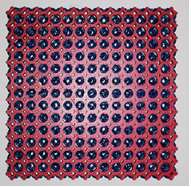
3D printed machine learning (ML) – driven composite substrates for customized values of dielectric content (εr)
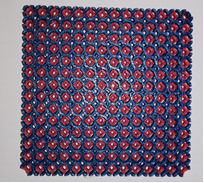
3D printed machine learning (ML) – driven composite substrates for customized values of dielectric content (εr)
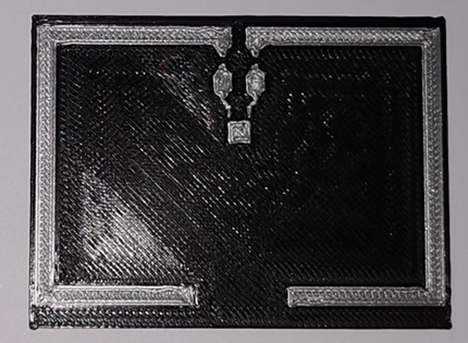
3D printed prototypes of RFID enabled sensor and patch antenna using composite substrates
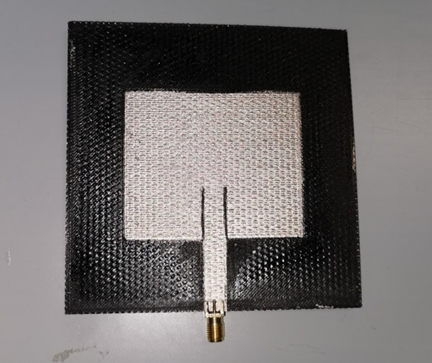
3D printed prototypes of RFID enabled sensor and patch antenna using composite substrates


The MARINES project suggests the use of a flying RFID reader that will be implemented using lightweight 3D printed support structure and it will be paired with co-developed additively manufactured RFID tags. The carrier, a commercially available UAV will be customized and will be equipped with a plug-in that consists of the embedded RFID reader and a 3D printed antenna array as transmitter.
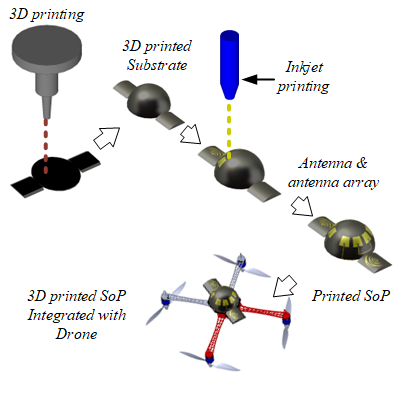
3D printed RFID reader host and support structure
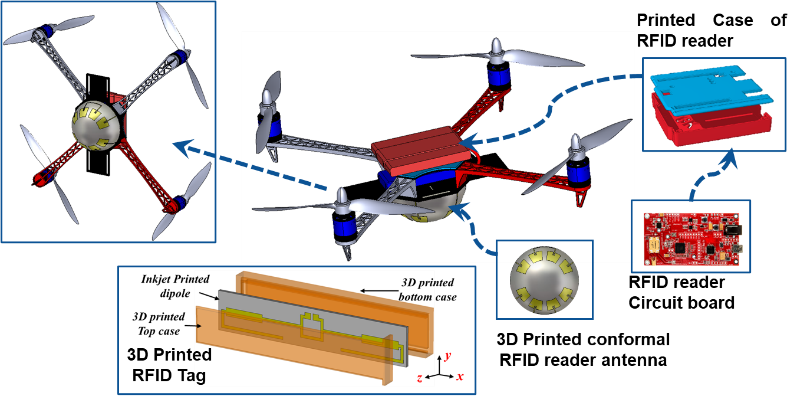
3D printed array and RFID reader package and 3D printed RFID tag